Test automation: where to start
Most teams that struggle with test automation did not pick the wrong tool. They tried to automate everything at once. Here is a simpler way to begin.
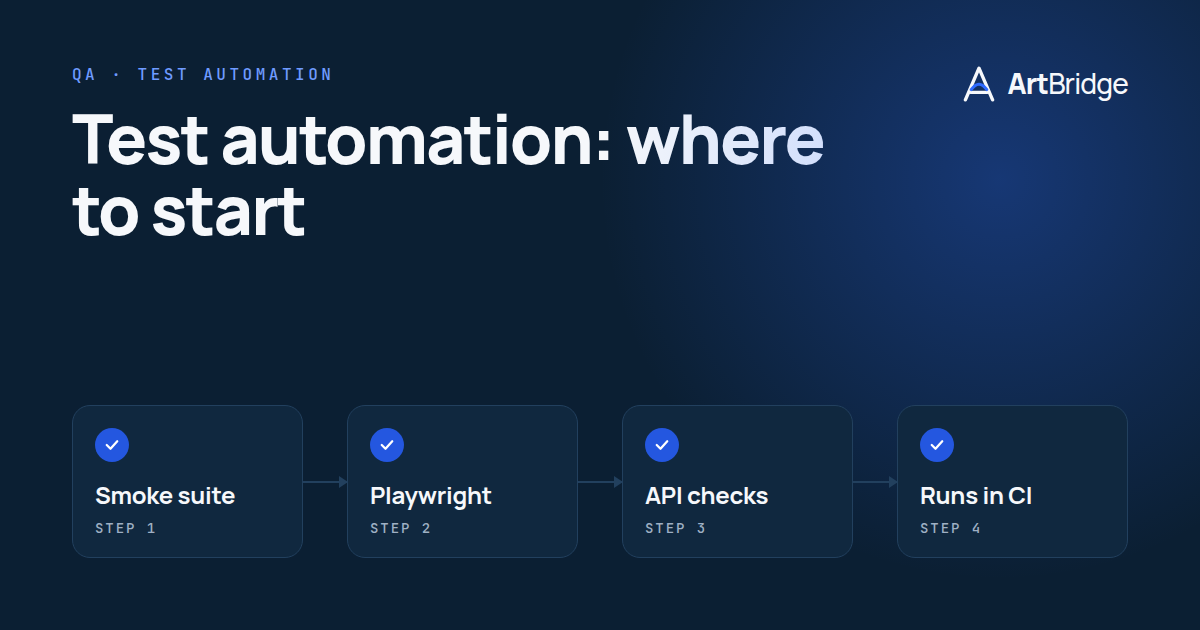
1. Start with a smoke suite
Pick five to ten flows your business cannot live without: sign-up and login, the main purchase or enquiry path, and the pages that bring in traffic. Automate only those. A small suite that runs in a few minutes and never lies is worth more than a large one nobody trusts.
2. Choose one modern tool and stick to it
For web products, Playwright is a strong default. It runs on all major browsers, waits for elements automatically and has built-in tracing that makes failures easy to debug. Whatever you choose, use one framework for the whole team so knowledge is shared.
3. Write tests that survive change
- Locate elements by role, label or a dedicated test attribute, not by fragile CSS paths.
- Keep page details in one place, for example with the Page Object pattern, so a UI change means one fix, not fifty.
- Make every test independent: it creates its own data and does not depend on another test running first.
4. Add API checks
Many bugs are cheaper to catch at the API level. API tests are faster and more stable than UI tests, so cover business rules there and keep the UI suite for the main user journeys.
5. Run it in CI from day one
Tests only protect you when they run automatically. Connect the suite to your pipeline so every change gets feedback before it reaches users.
6. Treat flaky tests as bugs
A test that fails at random teaches the team to ignore red builds. Fix it quickly, or quarantine it and track it until it is fixed.
Where to go next
Once the smoke suite is stable, grow coverage where defects actually appear, guided by your bug history rather than guesswork.
Need help getting there? ArtBridge Tech offers turnkey QA and test automation, from strategy to a working suite in your pipeline. Get in touch and tell us about your product.